MotoGP History: Why WorldSBK Champions Rarely Win Grand Prix
The pinnacle of two-wheeled motorsport, MotoGP, is a dream destination for many a rider. Yet, for an elite group of athletes – the World Superbike (WorldSBK) champions – the transition to Grand Prix racing has historically proven to be one of the sport's most formidable challenges. Despite their undeniable talent, WorldSBK titleholders have found it incredibly difficult to replicate their success in MotoGP, rarely making it to the top step of the premier class podium. This intriguing phenomenon begs the question: *wer gewinnt MotoGP* if not these proven champions, and what makes the leap so arduous?The Allure and the Abyss: A Tale of Two Championships
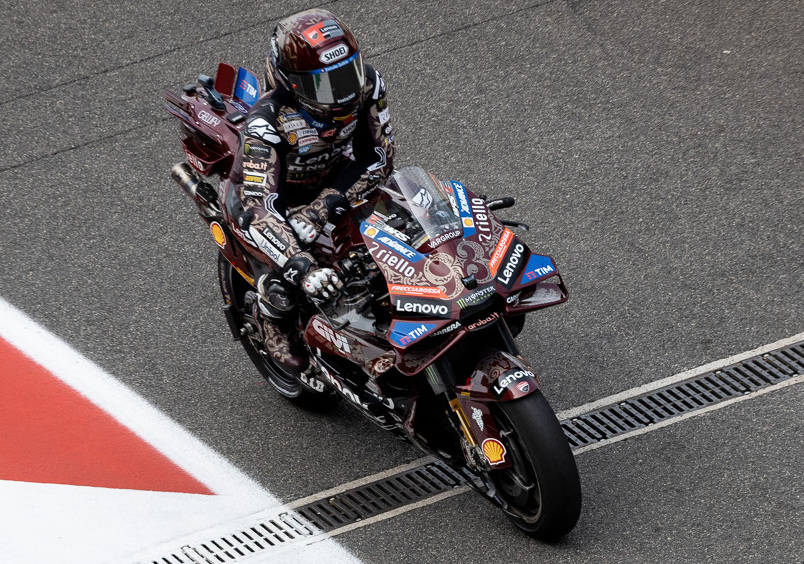
Both WorldSBK and MotoGP showcase motorcycle racing at its absolute finest, yet they operate on fundamentally different philosophies, which creates a significant chasm for riders attempting to cross over. WorldSBK features highly modified production-based motorcycles, bikes that you could, in theory, buy from a showroom floor and equip for racing. This means the machinery, while incredibly advanced, still retains some characteristics of its street-legal counterpart. Riders often rely on raw power, precise setup, and aggressive riding to tame these beasts. MotoGP, on the other hand, is the realm of bespoke prototype machines. These are purpose-built racing motorcycles, engineered from the ground up with no compromises for road use. Every component, from the engine to the chassis, electronics, and aerodynamics, is designed solely for maximum performance on the racetrack. This difference profoundly impacts everything from riding style to setup philosophy. The electronics are far more sophisticated, the tires (currently Michelin in MotoGP, Pirelli in WorldSBK) behave distinctly, and the chassis dynamics allow for extreme lean angles and precise control that a production-based bike simply cannot offer. A WorldSBK champion possesses an incredible winning pedigree, honed over countless battles on these powerful, albeit different, machines. They are masters of mechanical grip, throttle control, and racecraft. However, the move to a MotoGP prototype often requires a fundamental re-learning of how to extract performance, demanding adaptation to different braking points, corner entry speeds, mid-corner stability, and the unique feel of the tires and electronics.A Rare Breed: The Few Who Conquered
The historical data paints a stark picture: over 37 years and 19 WorldSBK champions, only two have ever managed to win a MotoGP Grand Prix. This exclusivity underscores the immense difficulty of the transition. The first to achieve this rare feat was Australian legend **Troy Bayliss**. After winning the 2001 World Superbike title, Bayliss made the switch to MotoGP, competing for Ducati and Honda between 2003 and 2005. While he showed flashes of brilliance and earned a few podiums, a Grand Prix win eluded him during his initial stint. His triumphant return to WorldSBK saw him clinch another title in 2006. In an incredible twist of fate, he was drafted back into MotoGP as a wildcard for the final race of the 2006 season at Valencia, replacing the injured Sete Gibernau. Against all odds, Bayliss dominated the race, leading a historic Ducati 1-2 finish and securing his sole MotoGP victory. It was a fairytale ending to an already illustrious season, showcasing his raw talent and adaptability, albeit in very specific circumstances. Five years later, American **Ben Spies** joined this exclusive club. The 2009 WorldSBK champion entered MotoGP with immense anticipation, quickly establishing himself as a top contender. He made 55 MotoGP starts, and his single, yet emphatic, victory came at Assen in 2011. That same year, riding for Yamaha, Spies finished a commendable fifth in the MotoGP World Championship, consistently battling at the front. Many believed Spies was destined for multiple wins and a genuine title challenge, but a cruel string of injuries unfortunately cut short his promising MotoGP career, forcing his premature retirement. His potential was undeniable, making his story even more poignant. Other exceptionally talented WorldSBK riders like Colin Edwards, James Toseland, Neil Hodgson, and Scott Russell also made the switch with great expectations. While they all displayed glimpses of their skill, achieving podiums or strong finishes, the ultimate Grand Prix win always remained out of reach. Scott Russell, for instance, stepped into the formidable shoes of the legendary Kevin Schwantz at Suzuki mid-1995 season, an almost impossible task for any rider, let alone one adapting from WSBK.The Unforgiving Gauntlet: Why the Transition is So Tough
The journey from WorldSBK champion to MotoGP Grand Prix winner is fraught with multiple hurdles, making it arguably one of the most challenging transitions in motorsport.Machine Dynamics and Technical Nuances
- Prototype vs. Production: As discussed, the core difference lies in the bikes. A MotoGP prototype has a stiffer chassis, more advanced suspension, and a power delivery tailored for maximum acceleration and cornering performance. It requires a riding style that exploits its ability to carry incredible mid-corner speed and brake deeper, often relying heavily on advanced electronics. WorldSBK bikes, being production-based, tend to reward a more aggressive, brute-force style, where the rider often has to compensate for the bike's inherent limitations.
- Tyres: The switch from Pirelli (WorldSBK) to Michelin (MotoGP) is a monumental one. Each tyre manufacturer has unique carcass constructions, compounds, and operating windows. Riders need to completely recalibrate their understanding of grip limits, feedback, and how to manage tyre wear over a race distance. A setup that works for one brand simply won't translate to the other.
- Electronics: MotoGP electronics are a different beast. Traction control, anti-wheelie, engine braking, and launch control are incredibly sophisticated and intricately mapped to each track and condition. Mastering these systems – learning how to exploit them while still feeling connected to the bike – is a steep learning curve.
- Aerodynamics: Modern MotoGP bikes feature complex aerodynamic packages (wings, fairings). While WorldSBK also incorporates aero, the level of integration and impact on handling and stability in MotoGP is far greater, demanding further adaptation.
Competitive Depth and Adaptation Time
MotoGP boasts an unparalleled level of competition. The grid is packed with riders who have grown up through the Grand Prix ladder (Moto3, Moto2), intimately familiar with the prototype philosophy from a young age. Every tenth of a second counts, and the smallest misstep can drop a rider several positions.
Unlike other sports where an athlete might have an 'off-season' to adapt, the MotoGP calendar is relentless. Testing is limited, and riders are expected to perform immediately. This high-pressure environment leaves little room for error or a gradual learning curve.
Mental Fortitude and Expectations
Stepping into MotoGP as a WorldSBK champion comes with immense expectations. The spotlight is intense, and the pressure to deliver results can be overwhelming. Riders often face scrutiny from fans, media, and their own teams, even when they are in the crucial phase of adaptation. This mental burden can be as challenging as the technical demands.